
King CNS
Why & how we should use the Central Nervous System to measure recovery

The brain doesn’t know we live in a time and place in history of relative safety.
It can’t distinguish between the stresses created by coworker troubles over parking arrangements and stressors caused by a neighboring tribe encroaching on our hunting grounds. It acts and governs based on the signals sent to it from our physical and emotional reactions to the stimuli in our environment.
To it, the max-effort deadlift, the all-out sprint, and the forty box jumps at the local cross-fit establishment weren’t executed voluntarily as part of an effort to self-actualize but rather as the result of an environmental factor that demanded an intense, immediate response to ensure survival.
As far as the Central Nervous System knows, the parking situation at work is about life-sustaining resources.
It’s sympathetic to these situations, literally. It increases cortisol and adrenaline, activates energy metabolism for immediate fuel requirements, ramps up the heart rate to give us more blood, quickens breathing for air, and contracts the pupils for vision.
It spends the money from the bank to pay the ransom.
The brain helps the body survive because the brain can’t survive without the body. It’s not our friend; it’s our life partner. Like it or not, we are tied together at the spine for life.
The ransom is high each time this occurs, and given the right tools, the brain responds by building a more robust system. Its muscles fire faster, and they coordinate better. The neurons innervate more muscle fibers, the eyes track objects more effectively, and the hands learn how to catch, lead objects on the move, and aim better. It reacts to visual cues more effectively and instinctively, and its tendons become robust and store more energy.
But it will always need more money in the bank to pay ransoms that occur too frequently. It knows this. It knows the muscles, bones, and tissues can’t handle it. They need recovery. If it kept sending the same signals to tissues needing rest, they would tear themselves apart, so it sends a signal of less magnitude for our protection and its own.
If we allow it, the CNS will help us heal as well, however. If the upper, conscious, thinking brain seeks out an environment of calm, safety, and nourishment, it will take that signal and allow our breathing to slow. It will allow us to sleep fully and deeply. It will down-regulate the release of adrenaline and cortisol and send signals of hunger. It will direct blood and energy to digestion and repair. It takes time to repair, though.
Eventually, our ability to perform intense tasks will outpace our ability to recover from them. Unlike endurance training, in which humans have been able to achieve almost unbelievable volumes of work, intense exercise can never be trained to a point where any considerable volume can be withstood.
And there’s a reason for this. The sympathetic response is designed for emergency use only. In the rare instance where an all-out effort is required, milliseconds can mean the difference between life and death. “Knowing this,” the human organism has prioritized increasing the magnitude, strength, speed, and power over the ability to do the same amount with more volume. Thus, by doing so, the resistance, the speed, and the jump that used to be intense for us will no longer be as intense. To run 21mph requires exponentially more juice than 12mph. But, at one point, 12mph may have been our max effort. Our bodies have adapted, so that is no longer the case. But doing so has created the need for a much more intense output at our new maximum potential.
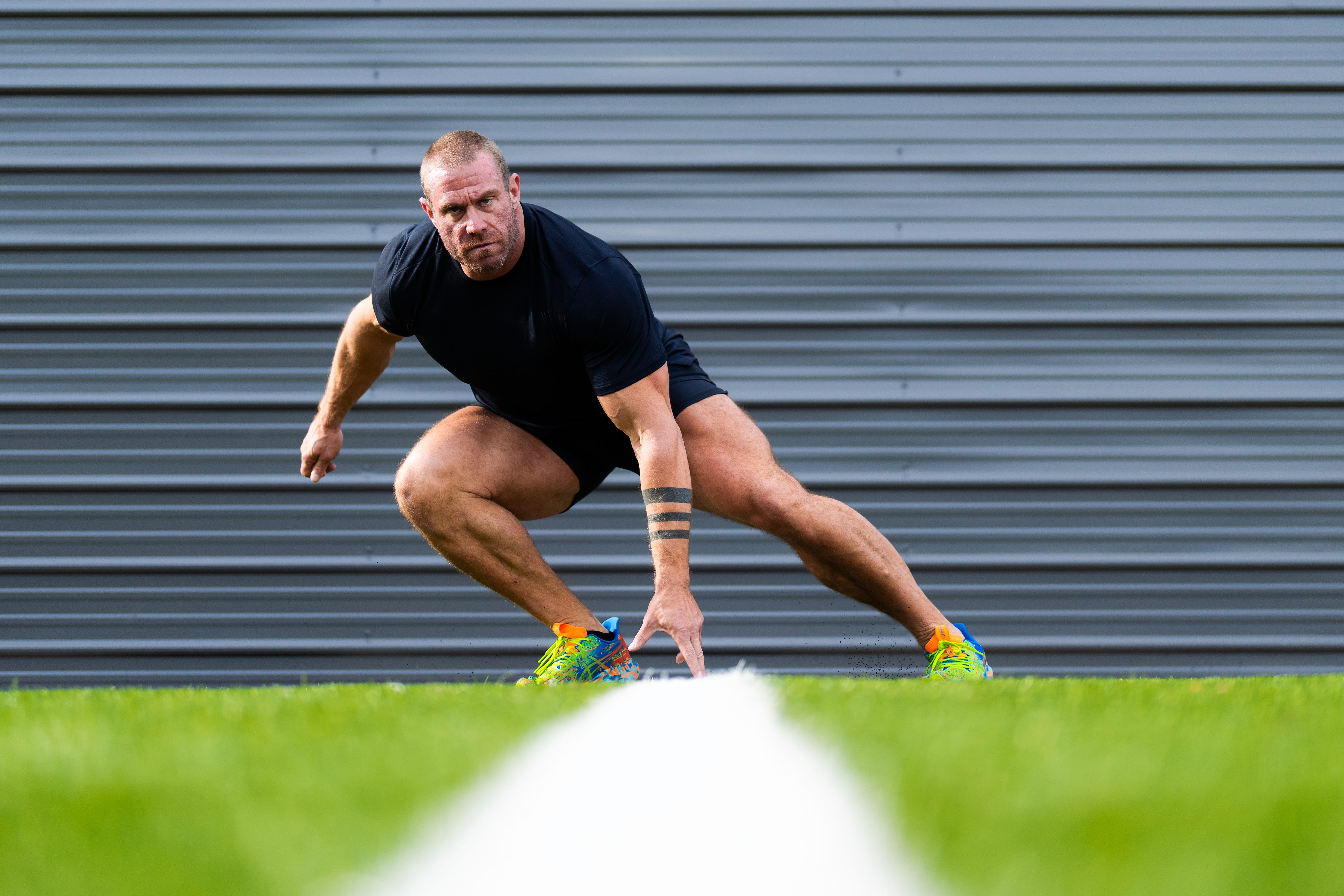
All things being equal, an athlete whose max speed is 12mph can run several more 12mph sprints than an athlete who can run 21mph, and they can also recover faster from that effort because the slower athlete isn’t able to put out nearly the wattage, and thus their recovery time is shorter. The same is true with strength and power athletes. An athlete who can deadlift 200lbs can do several more reps throughout the day and week than an athlete who can deadlift 600lbs. Elite athletes need and can do far less frequency and volume of their percentage 1RM than novice athletes.
The body always creates abilities in response to demands that it can’t sustain at equal volumes. This is why we don’t just naturally have these abilities. They are demand-driven. Why create a system that requires immense energy to sustain itself while at rest if the demands will never be there? Why create a means for its demise if the threat doesn’t warrant it. Without the Soviet Union, there would be no atomic bomb.
It wants us to live, not optimize.
Not all exercises affect the CNS equally, and not all modes of exercise require a fresh CNS. But here’s the catch: if the CNS is allowed to go too long without the chance to recover, all other bodily functions and abilities will suffer alongside it.
Intense exercise quickly fatigues it. Its fatigue acutely affects intense exercise, but what’s more, its prolonged fatigue affects the parasympathetic system, which all other systems depend on working properly for their recovery.
Only some of the kingdom needs a fully rested king to do its job.
But if the King suffers too long, the kingdom suffers because things will stop being maintained. If there’s always a battle being waged at the walls, the roads inside can still be used, but they won’t be repaired. And if they are allowed to fall into too deep a state of disrepair, eventually, nothing even makes it to the walls.
Also, the longer they go without repair, the longer it takes to repair them.
I don’t need a fresh CNS to run two miles fast. I do need one, however, if I ever hope to run two miles faster than last time.
